Underwater Video Mosaicing Using Topology and Superpixel-Based Pairwise Stitching
Yan Li, Carly J. Randall, Robert van Woesik, and Eraldo Ribeiro
Florida Institute of Technology, Melbourne, FL 32901, U.S.A.
Abstract
Expert and intelligent systems based on computer-vision algorithms are becoming a common part of our daily lives, as they help us solve problems in areas such as medicine, agriculture, transportation, and ecology. In this paper, we focus on the application of computer vision in marine ecology. Here, we propose a new algorithm for mosaicing images of coral reefs captured by scuba divers using hand-held cameras during reef surveys. Such images often capture partial views of the surveyed area that are then collated into mosaics of the reef assemblages. Accurate mosaics will help coral-reef researchers rapidly assess not only the status of coral reefs, but also determine rates of recovery or rates of decline using longitudinal data. Most standard mosaicing algorithms distort the images, however, and motion and parallax errors, which usually happen in underwater images, hinder mosaic construction. To overcome these issues, our new algorithm uses a two-step approach that first detects and then removes loops and low-quality regions from an estimated camera trajectory. The algorithm then stitches the remaining images by warping parallax-affected image regions with a geometric transformation different from the one used for parallax-unaffected regions. We tested our method on images captured during a large spatial survey of coral reef sites throughout the Caribbean region. Our method obtained better-quality mosaics than other state-of-the-art algorithms.
Method
An overview of the final stitching process is show in Figure 1.

Figure 1: Overview of the mosaicing process. We match features between source and target images under a homography model. The source image is segmented into superpixels, and the superpixel that contained the most reliable matches is selected as a reference region. These matches are used for re-estimating the homography. A cutting line splitting the source image into parallax and non-parallax regions is calculated. The non-parallax region is stitched to the transformed target image using the homography. A similarity transformation stitches the parallax region to the preliminary mosaic.
Mosaicing results
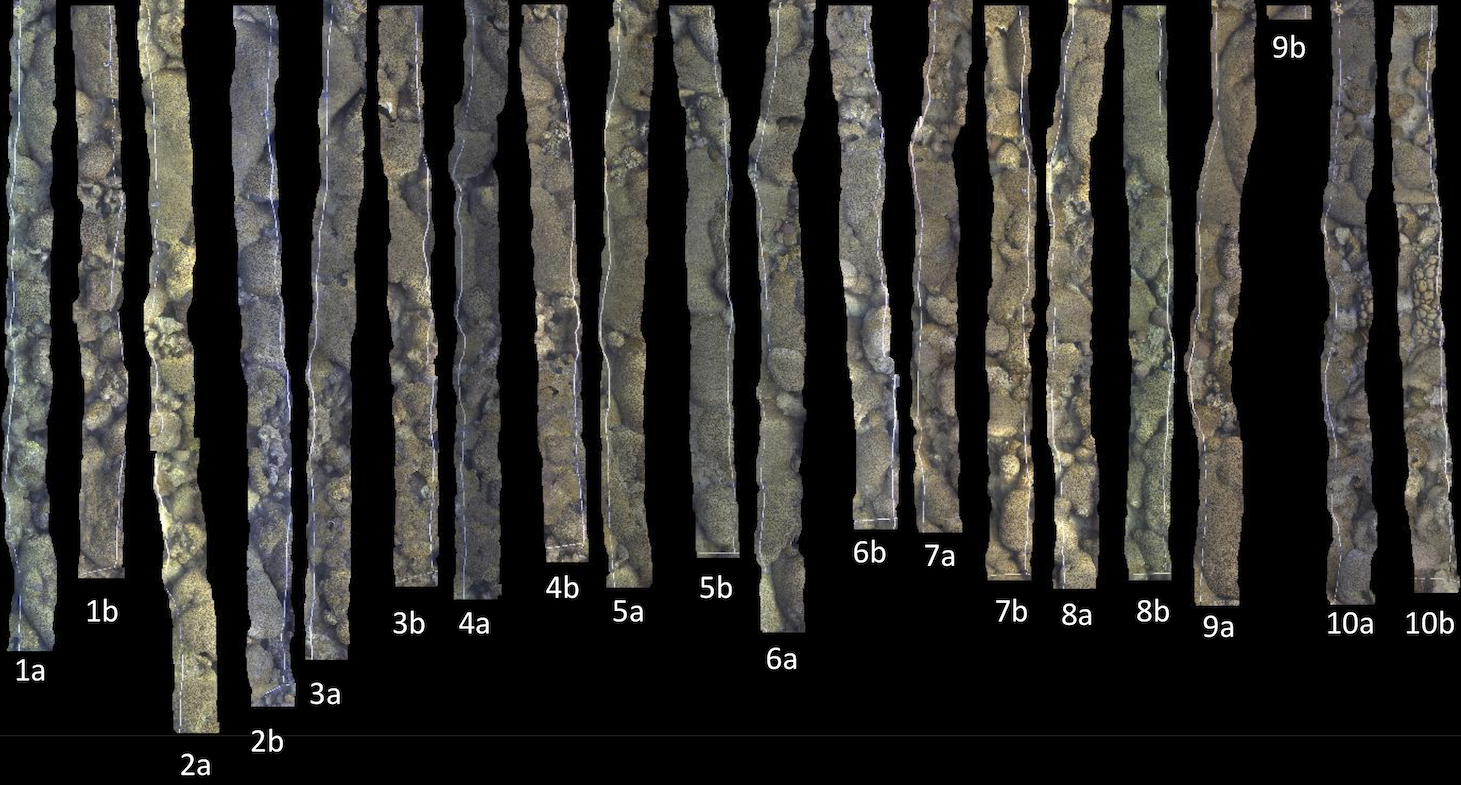
Figure 2: Mosaics of 20 videos of a coral-reef site from our dataset.
Downloads
The source code of the mosaicing method and the database used to produce the results presented in the paper can be made available by request. Please, email us at eribeiro@fit.edu for information.